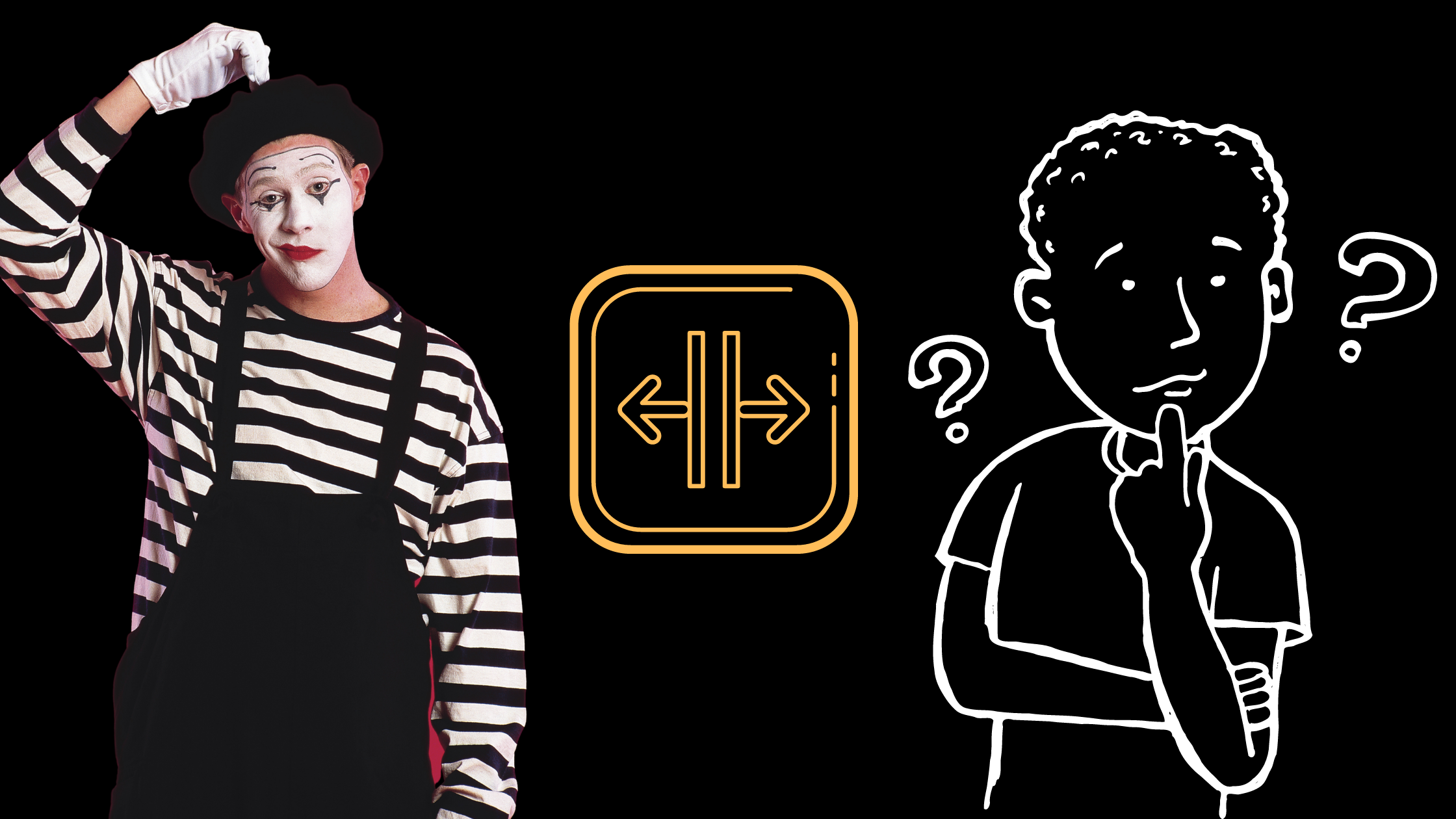
Mimes are a type of performer you either love or hate. But even those who avoid them at all cost may be connected to them on the deepest level. To know if you’re part mime, you first need to understand their origin.
Where do mimes come from?
Historians differ on the exact location, but the first known mimes were discovered by a crew of sailors in ancient Greece who were first-time visitors to their island. There, they found an unusual tribe of humans who shared this island with a (now extinct) species of carnivorous zebras.
To survive among these predators, mimes evolved two main defensive traits:
black-and-white striped skin to blend in, and completely non-verbal communication to counter the zebras’ incredible hearing.
It was stories from this first group of sailors that brought other visitors who also spread the word about mimes. These stories inspired street performers who became popular in larger cities and inspired a legacy of performers themselves.
Eventually, some biological mimes joined crews of visiting ships to travel the world and start new families of their own. This spread their genetic traits to many people today.
Three ways to tell if you’re part mime
Visual traits of biological mimes mostly faded through successive generations, but the three strongest traits passed along to varying degrees are:
- Exceptional non-verbal communication. This trait is beneficial at noisy dinner parties but goes beyond asking someone to pass the salt with a friendly point and tilt of an imaginary saltshaker. Many guests may compliment the host or cook after the meal, but these can’t compare to what a biological mime conveys with a simple thumbs up and satisfied belly rub.
- Uncanny face and body control. Biological mimes can project their emotions powerfully with facial expressions that range from really, really sad to very, very excited. With their bodies, they can astound people with movements that perfectly replicate actions like walking against a strong wind or even lifting a heavy barbell over their head from off the floor.
- Experiencing an unseen alternate reality. This is by far the most unusual and difficult trait in the life of a biological mime. They may walk casually down the street on a beautiful sunny day then suddenly find themselves trapped in an invisible box. Even at home, the simple act of walking behind a couch can lead to walking down impossible stairs of an unknown basement.
What makes this important
For those just realizing you’re part mime, know that you are not alone and that groups are making efforts to increase awareness and acceptance on your behalf. What can everyone do to help? There are two important ways — according to the lead biological mime advocacy group, Members for Mutual Understanding of Mimes (or MMUM).
- Understand their struggles. Biological mimes are often victims of their unique abilities. If you see one trapped in an invisible box, pick up an invisible hammer and break them out. You may see one struggling in an invisible rope tug of war, you can support them by sharing your strength and pulling with them.
- Respect their power. They can speak a universal language with the power to communicate and connect with young and old of all nationalities. That’s why everyone should respect the value that biological mimes bring to our world.

 Bad Speler. Good Writer.
Leave a comment